
Love flourishes in stylistic comedic short film ‘Twee persent’
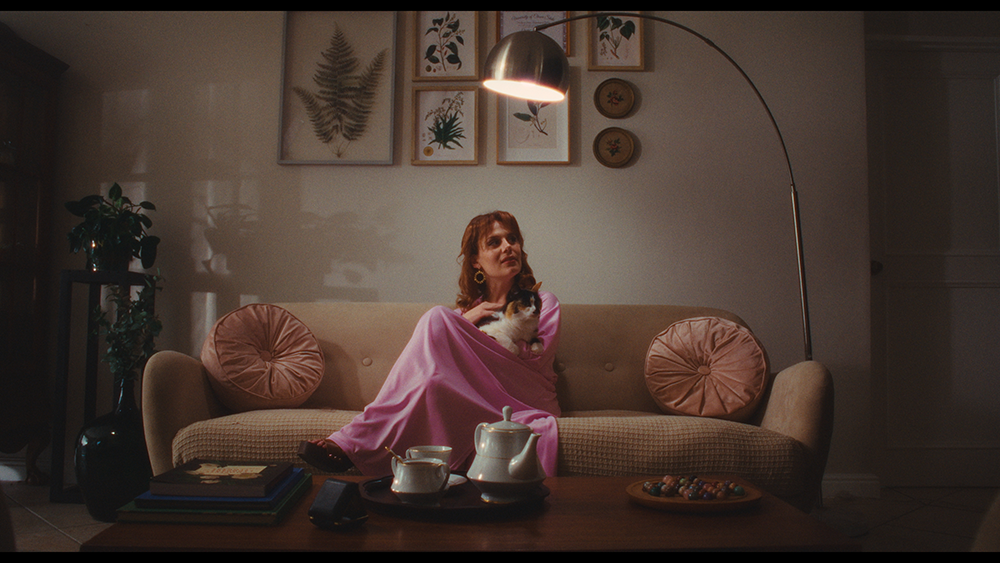
In the stylistic and comedic short film Twee persent, the viewer enters a kind of parallel world of beauty and innocence that evokes an earlier era – a love story that unapologetically offers escapism.
Michelle le Roux, writer, co-director, and lead actress playing Charlotte, says it is a simple story of two people forming a bond – something everyone can relate to. “We all just want to escape sometimes, hence one of the reasons why we create.”
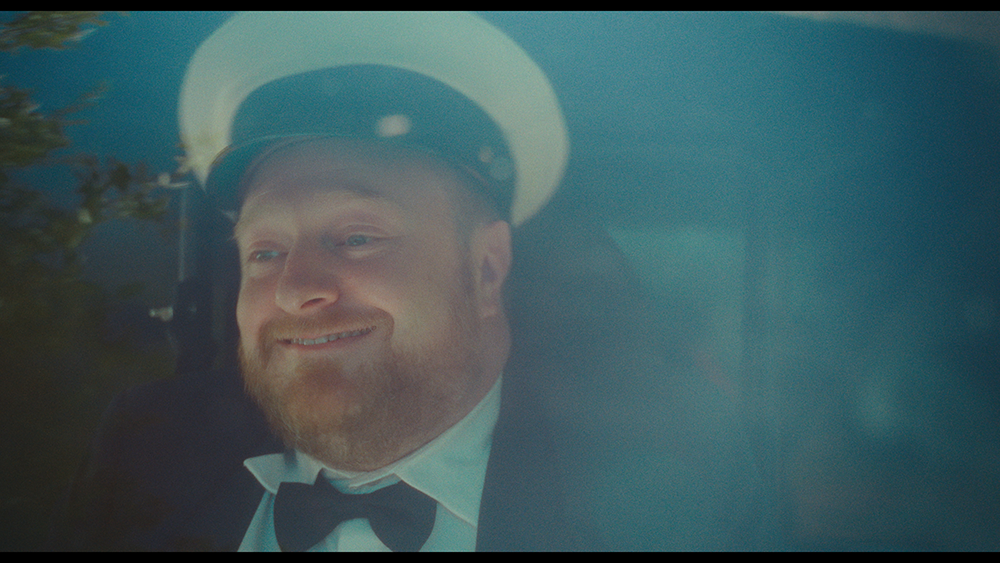
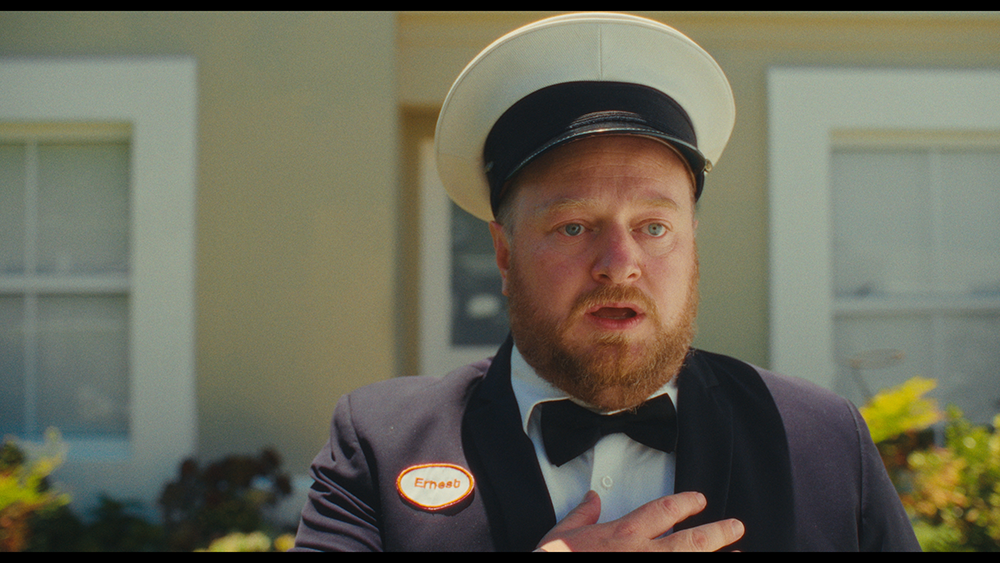
And so the story of Charlotte and the milkman, Ernest (Albert Pretorius), unfolds in Twee persent, which makes its debut at the kykNET Silwerskerm Festival in Cape Town at the end of August.
Where did the idea come from? And are you not a little too young to know about milk delivery?
It was a simple what-if moment while I was sitting one day drinking one of many cups of tea: “Help, I am in love with the milkman but I’m lactose intolerant…” The idea that an allergy can stand in the way of two people.
Don’t younger people know about the milkman? Perhaps it comes from watching too much TCM (a classic film channel) as a child.
Incidentally, co-director Heinrich Laubscher’s grandfather owned a dairy on the West Coast back in the day.
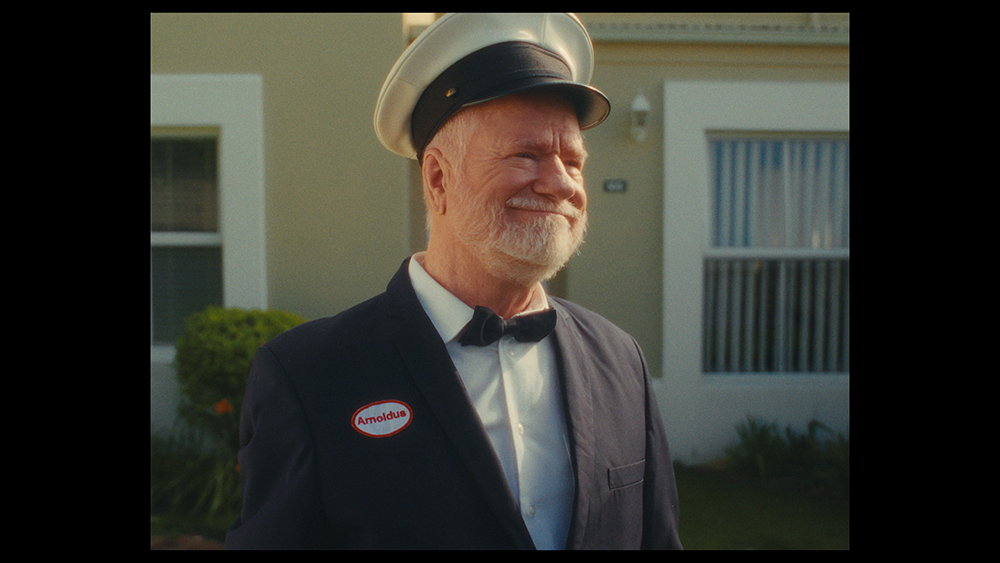
The film is set in the imagined suburb of Suville, with its people living their orderly lives. And Charlotte, with her lactose intolerance, lives in Pasteur Street. And the short film’s title… What are the challenges of writing a comedic film?
Comedy is a very difficult genre because it is particularly subjective. I sit on the sidelines and write and tell what I think is funny and absurd, because there is always something to write about in everyday life – an individual, a household, a neighbourhood that looks ordinary and normal.
I think Twee persent’s type of comedy is something everyone can enjoy – it is a self-aware wink at the viewer.
The visual approach is one of old-world charm and muted colour. Is that how you wrote it?
Indeed it is. The neighbourhood of Suville is a parallel world to ours – a world with its own what-ifs and how-comes. There is, for example, no visible technology, except for an electric milk float.
The world feels familiar because it is, and yet there is just something slightly different, something strange. Viewers get the opportunity to immerse themselves in a new world. It makes you think of something that once existed, but not quite as one remembers it.
What was it like to work with your co-director? This is your debut as directors of a narrative short film. Did you work together on the vision of the film?
Not without challenges, but it helps that we have been a couple for over five years. We know each other well and complement each other – as the clichés go – we are crunchy peanut butter and syrup together on a sandwich…
We worked on the vision together, especially later in the writing process when I got him involved as co-director – I had to twist his arm, as he was worried we would argue. He was a sounding board who sometimes had to bring me back down to earth.
We have also worked together on set many times before – from music videos to corporate interviews.
By the way, does that suburb one sees at the beginning of the film actually exist?
It exists! We searched for the perfect neighbourhood, driving from one place to the next, but nothing really gave us the feeling of Suville. An older lady I know suggested the Oude Westhof retirement village in Bellville. From the moment we drove through the gates, we realised it was perfect. We were able to film everything on location, and are so grateful to the people of the retirement village – friendly, eager to help, and pleasantly curious.
Heinrich, tell us more about the soundscape, because sound and music play an important role – and also about the use of overhead shots.
Music and film go hand in hand. Michelle knew from the very beginning exactly how the music for the film should sound, based on her vision. She went through an endless catalogue of music. The challenge for me was to ensure that the music’s emotional peaks fall in the right places relative to what we see on screen. Because 95% of the film has no dialogue – though there is a narrator – the music had to help tell the story, and in some cases it also determined the editing of each scene.
As for the overhead shots, this was something we knew from the beginning we wanted in the film. We discussed it with our cinematographer, Michael Ellis, and for us it was non-negotiable. We felt that the overhead shots would best tell the story of the relevant scenes visually. Michael and the grips made it happen, and we are very pleased with the end result.
Michelle, do you have other screenplays in mind to brighten people’s lives?
Many – I hope. My head and notebooks are full of stories and ideas, and I am already working on two other screenplays (in development). Let’s say I am perhaps building my own universe, and perhaps all these stories take place within the same one. Suville could therefore perhaps just be part of a larger world within this parallel world – in a liminal space, or one could even call it a kind of twilight zone. The stories I am currently working on are also comedic in tone, but darker and more satirical about life in a suburb. (I grew up in a typical suburb and there was always a feeling that something was bubbling beneath the surface.) I love and seek out the weirdness, strangeness, and absurdity of the everyday.