

Documentary ‘Die gees agter die spiere’ Speaks to a Wide Audience
A person’s childhood dreams can change, or you may later realise there’s another aspect of your dream you’d rather pursue. Instead of chasing personal achievements on the sports field, Dr Henning Gericke realised he actually wanted to help others reach great heights and grow personally.
Die gees agter die spiere tells the story of a sports psychologist who was once good enough to compete as a sprinter on the world stage, but ultimately helped others fulfil their dreams. Or overcome disappointments and setbacks – because after all, that’s part of the path to success.
Henning faced a personal challenge during the filming of the documentary, which adds even more depth to the message of hope it conveys. It also includes honest and candid interviews with athletes such as Cameron van der Burgh, Marcell Coetzee, and Os du Randt.
Questions for Pierre Malan, director
The idea for Die gees agter die spiere didn’t come from sports circles, but from someone who is actually an antiques enthusiast. Tell us more.
I actually heard about Dr Henning Gericke through Natie Ferreira (the film’s producer), whom I got to know while filming his show Fanaties. Natie told me about Henning’s life story, and what immediately gripped me was that he was a talented athlete who had qualified for the Olympic Games, but because of apartheid never got the opportunity to live out that dream.
But it wasn’t just his own story that made me curious. Natie also told me about Henning’s special ability to bring out the best in people. Here was someone who had lost his own dream, but then dedicated his life to helping others reach theirs.
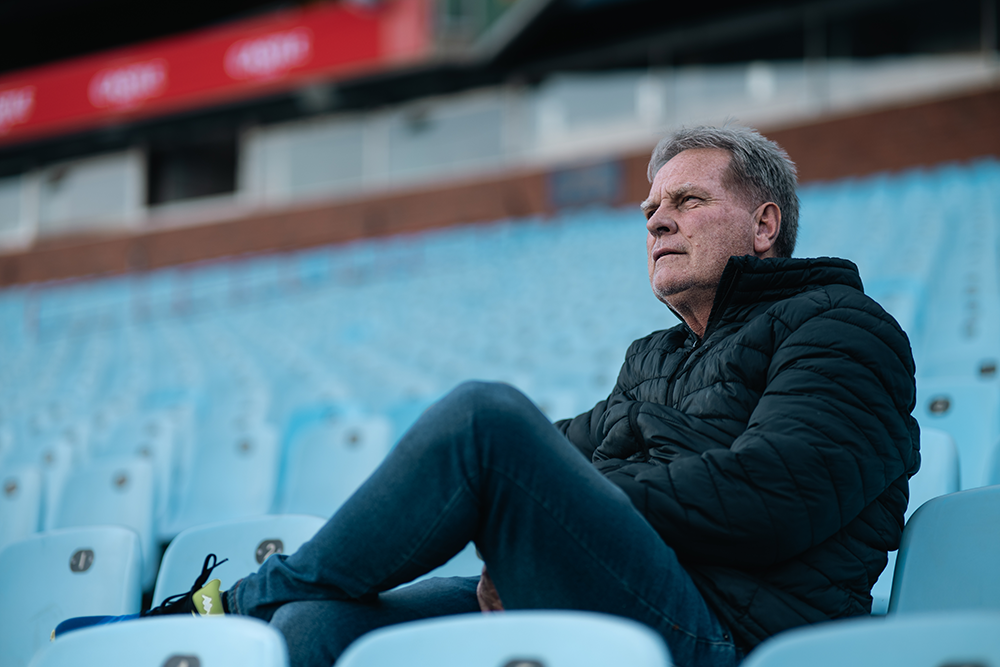
I wanted to meet him, and we went for coffee at Loftus Versfeld (rugby stadium in Pretoria). What struck me was how easily he had access to this world behind the scenes of professional sport. Everywhere we went, there were people who knew him and had stories to tell. It felt as if I had suddenly been given access to a world most people never see.
That’s when I realised this isn’t really a story about sport. It’s a story about the human spirit, about setbacks, about second chances, and about someone who had an extraordinary influence on other people’s lives. That was the beginning of Die gees agter die spiere.
During filming, Dr Henning Gericke’s wife, Hennelie, was diagnosed with Guillain-Barré syndrome. How did that change the documentary?
It changed the documentary on a very deep and personal level. Initially, we had focused on Henning’s work with top athletes and how he helped people overcome challenges. When Hennelie was diagnosed with Guillain-Barré syndrome, we suddenly saw how the themes of the documentary played out in Henning’s own life.
Here was someone who had spent years helping other people get through difficult times, and now he had to face one of the biggest challenges of his own life. In many ways, the principles he had always spoken about were now being tested in his own life. It made the documentary more human and showed that no one is exempt from hardship, not even the people who help others process it.
Where did your journey as a documentary filmmaker begin? And what does Die gees agter die spiere mean to you?
I think my journey as a documentary filmmaker actually began long before I ever picked up a camera. When I was still working in a bookshop, I realised how incredibly interesting ordinary people’s stories can be. People would come in to buy books, but behind each one was a life full of experiences, challenges, and unique stories.
Later, when I was working on my first travel programme for SABC 2, it only reinforced that realisation. Everywhere we went, we met people whose lives were just as interesting as any character in a feature film. It made me realise that the best stories often don’t come from someone’s imagination, but from real life.
That’s what draws me to documentary films. I want to tell stories about real people who have experienced real things. For me, Die gees agter die spiere is exactly that kind of story. On the surface it’s about sport, but really it’s about people, about setbacks, about hope, and about the ability to keep going when life puts you to the test.
Die gees agter die spiere focuses on the tough world of sport, the involvement of a so-called “shrink” in athletes’ preparation. At times you can see some of them are close to tears. Tell us about the aspect of healing.
One of the surprises during filming was how honest the participants were. We often see sports stars as strong and unbreakable, but many of them openly talked about their fears, disappointments, and challenges.
What struck me is that healing isn’t portrayed in the documentary as something dramatic. It often happens when people become honest about their pain and accept their humanity. The film shows that even the strongest people sometimes need help, and that there is great strength in acknowledging that.
Humour also plays a role when working with the human spirit. How does Leon Schuster fit into the story?
Leon brings a unique perspective to the documentary. People know him as someone who has been making South Africans laugh for decades, but in the film he also opens up about difficult times in his own life and the role Henning played in it. Henning was for many years someone he could go to for advice and support.
What’s interesting is that it also worked the other way round. Leon tells how he and Henning worked together to use humour as a tool when the Springbok team was going through a difficult time. Humour helped break the tension, brought people closer together, and recreated a sense of unity in the group. It’s a good example of how something as simple as laughter can sometimes make a big difference.
Anything else you’d like to share with the viewers?
I hope people realise this isn’t just a documentary for sports enthusiasts. The themes in the film are universal. It’s about dreams, setbacks, growth, and the people who help us become the best version of ourselves.
If viewers walk away with a little more hope, or perhaps a new appreciation for the people who help carry them through difficult times, then the film has done its job.