
Short film ‘Short Back & Sides’ an ode to women, even though the main character is a man
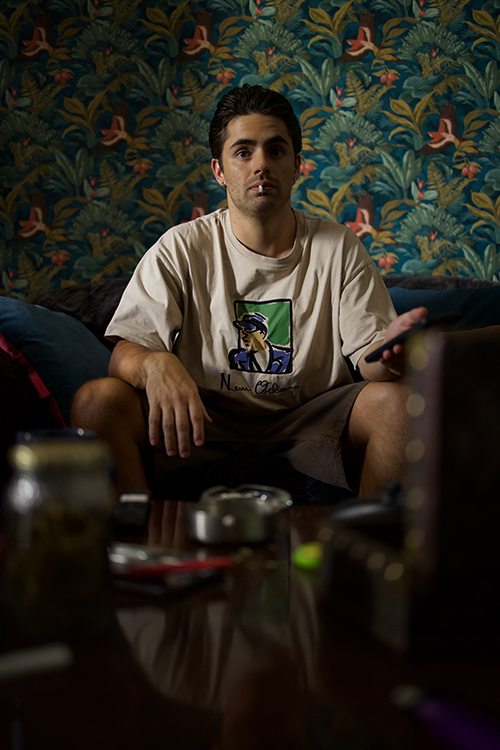
A socially awkward young man shuts himself off from the world in his chaotic apartment in Johannesburg, where he takes refuge in a virtual world of gaming.
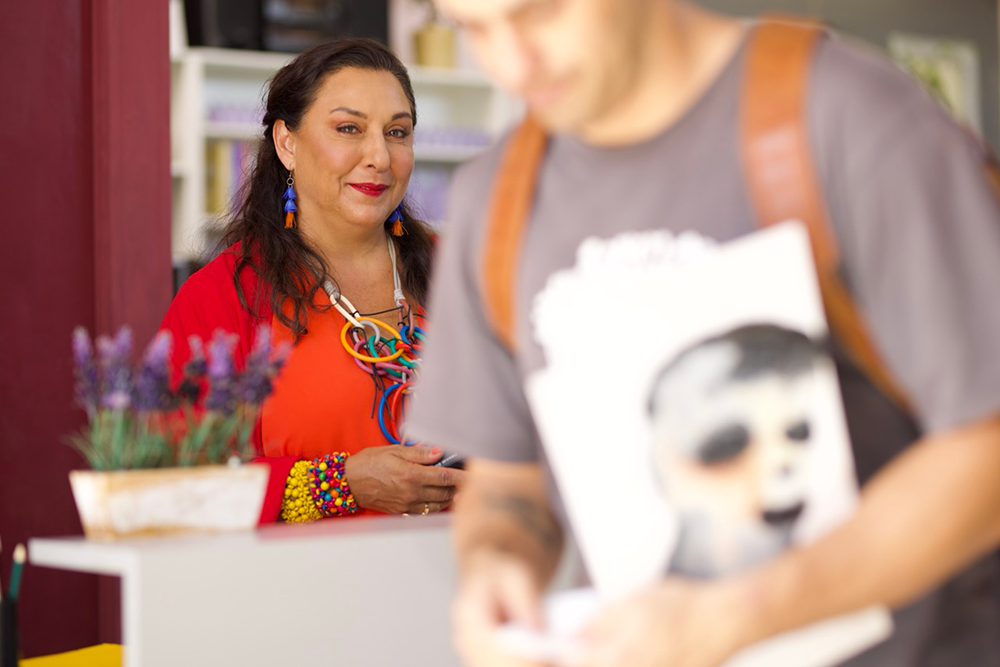
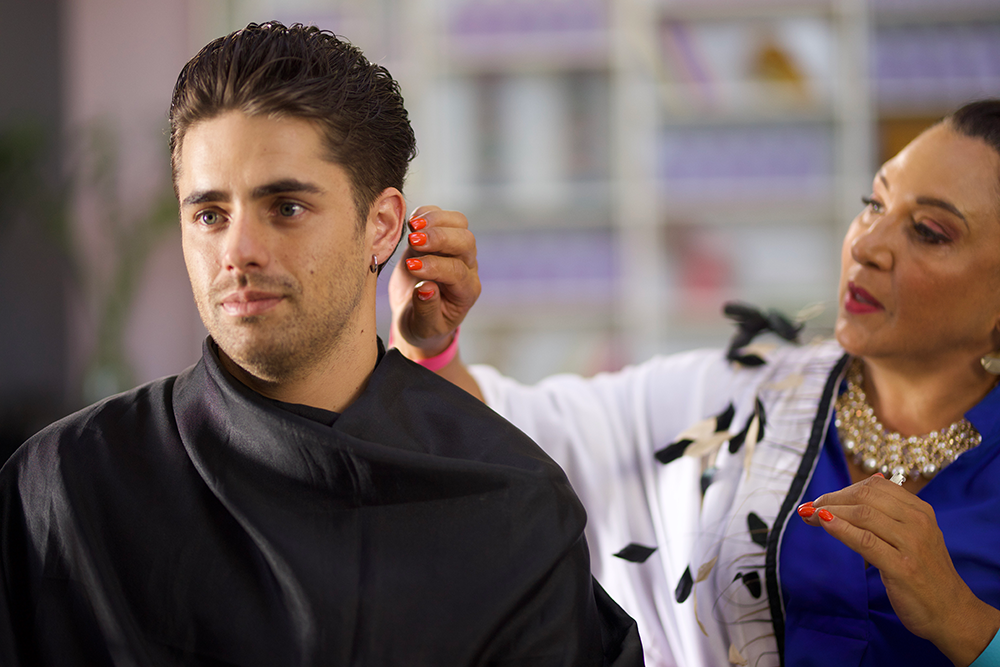
But thanks to the help and persistence of two women, Freek (Ruan Wessels) is not allowed to hide behind his cynicism and quiet rage. Fernanda (Heléne Lombard), the hairdresser with her own scars, recognises something in him and overwhelms him with her generosity of spirit. She teaches him the value of community and friendship.
He is also encouraged to reach out to his long-time best friend, Mandie (Megan Vorster), with whom he has had a falling out. Because “people need people”. Gradually, he not only comes out of his shell, but also begins to bring order to the chaos – and the value of a good haircut should not be underestimated…
Questions for Hennie van Deventer, writer-director, whose debut short film screens at the Silwerskerm Festival.
The main character isolates himself and avoids people. He spends more time in front of screens than socialising. Before we get to Freek specifically, elaborate a little on the broader theme of young people’s dependence on screens. Is this a problem?
It can be problematic, yes. There is a global movement to protect young people from excessive screen exposure – such as the social media restrictions for children under 16 that were recently introduced in countries like England and Australia. Screens do not disappear once you turn 16, however, and they are increasingly contributing to isolation among people of all ages. In Freek’s case, the screen is not the reason for his isolation, but rather a symptom of it.
Freek’s reasons for his isolation also relate to relationships, specifically his father. Tell us more about this theme – and also how it is explored visually.
Freek grew up in a household where he had to walk on eggshells, and learned very early on that he could not necessarily rely on the adults in his life to provide him with stability. As a young adult, he completely overreacted to that life lesson: the best way to guarantee stability for yourself is to shut other people out of your life and rely only on yourself.
Freek’s flat is his hiding place, and that is why it feels dark and intimate there. It is not a prison, but rather a cocoon – as Fernanda says – where he is sheltered from the world and where he feels safe. But it is also what holds him back from personal growth. He is trapped in the comfort of his cocoon.
It is two women who encourage and help him to come out of his shell. Tell us more about them and the choice of the specific characters you utilised.
I realised early on that the story is actually about women, even though the main character is a man. Mandie sees Freek’s potential long before he sees it himself. Fernanda sees what choice he needs to make about who he wants to be. It takes the women in his life to hold up a mirror to Freek and force him to look at himself honestly. Because women know that their own safety often depends on how well they can read the men in their lives.
Thematically, you also work with chaos that needs to be ordered – and physical appearance is connected to this too. Hence the title. Elaborate a little on this.
Freek’s hair was symbolic of the chaos of his character, but also of the chaos of making my first film on a very small budget! We initially looked at wigs and hair extensions due to continuity issues, but quickly realised it would not look convincing. Angelique Eksteen, who worked wonders with wardrobe, make-up, and hair, greased and twisted and glued and fastened Ruan’s own hair with hair clips to create the illusion that it was shorter than it actually was for the scenes before and between Freek’s haircuts. Lesson learned: save the stories about haircuts for when there is a budget for good wigs and extensions!
In terms of the themes, it was an obvious metaphor for Freek’s journey. The more he started to like himself, and the more he chose to be the version of himself that others had already seen in him, the neater his hair became.
The film was shot in Johannesburg, in the suburb of Linden. Is that where you grew up? Does Johannesburg get enough attention in films – and not just as a city plagued by violence or the City of Gold?
I grew up in Pretoria East, but lived in Linden in my early twenties. Today, two decades later, I still live a stone’s throw from the neighbourhood. It is one of my favourite places in Johannesburg and is characteristic of the city itself: a place of contrast and creativity and chaos and danger and beauty and excitement. It was important to me to make Linden visibly part of the story’s world, precisely because Johannesburg is so neglected in film. There is an energy here that you won’t find anywhere else, and in many ways Johannesburg feels like the place where the country happens. There is no South Africa without Joburg.
The short film is your debut in narrative form. Are there more stories you want to tell?
Yes, absolutely. I’m afraid the bug has bitten and now I’m hooked. There is a whole range of ideas at various stages of development.
Anything else you would like to share with viewers?
The scene where Fernanda is in a wheelchair and cuts Freek’s hair with the help of her friends actually happened to me. It is the inspiration for the story: about 12 years ago I went to my regular hairdresser, an older Portuguese woman named Fernanda (see what I did there?), and there she was in a wheelchair, surrounded by four of her loud Portuguese friends – all talking at once, laughing and chatting and carrying on while she cut my hair. Even then I thought it was such a beautiful moment of friendship and community and showing up for your friends. When I started thinking about story ideas to write, it was the first one that came to mind. But one scene does not make a story, and so Freek and Mandie and the film’s version of Fernanda came into the picture.
Ultimately it is a very personal story – far more so than I initially thought it would be. Freek is not entirely based on me, but we share enough DNA that we are certainly family.