
Short film ‘Trilstraat’ explores relationships and unexpected challenges
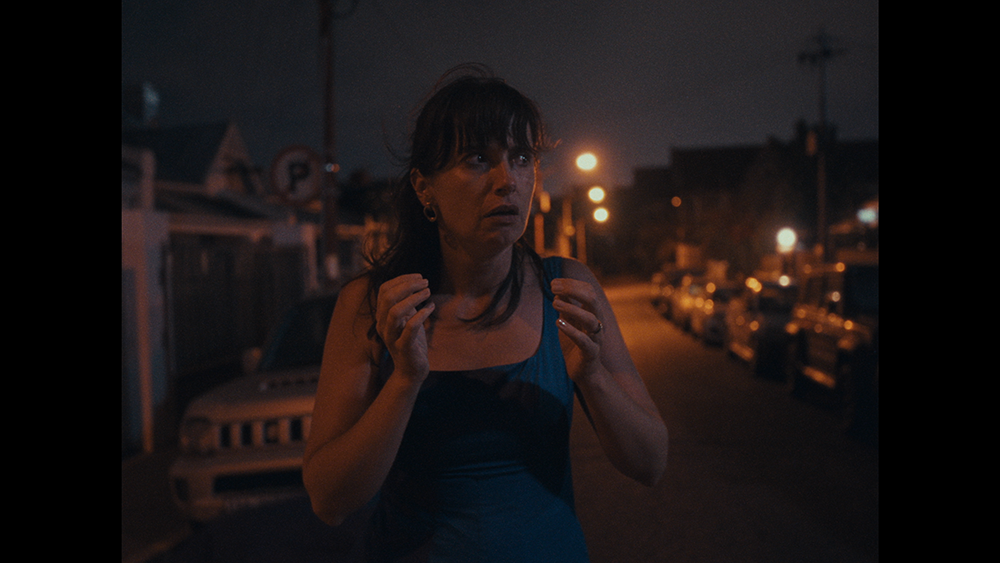
An exciting evening out for a couple in Cape Town takes an unpleasant – and surprising – turn when they are robbed on their way back to their car.
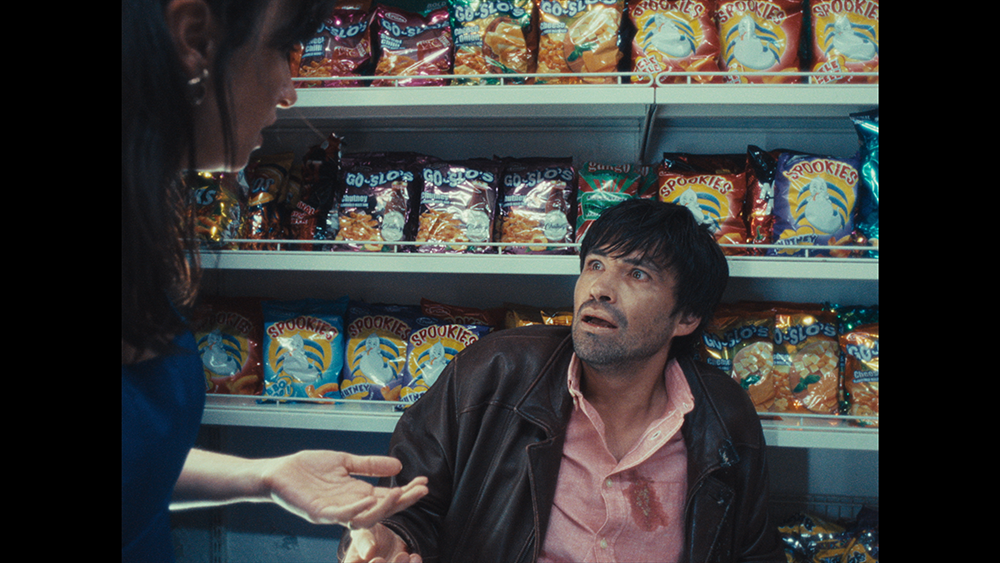
Although a traumatic experience, the greatest challenge is not finding help in the middle of the night. The contrasting reactions of the man (Ludwig Binge) and woman (Cintaine Schutte) are a revelation. It is a moment of disillusionment, and the bond between the two suddenly no longer seems as strong.
Director Carla Smith hopes people will spare the 11 minutes to come and watch Trilstraat, which she describes as essentially a relationship drama that examines society’s entrenched gender roles. It makes its debut at the Silwerskerm Festival, which takes place in Cape Town from 19 to 22 August.
Questions for Carla Smith, director and co-writer
Igna Botha is credited as co-writer. Where did the idea come from? And how did you collaborate on the development of the screenplay?
Igna and I have always wanted to write together, and with this year’s Silwerskerm Festival we decided the time was now. We complemented each other well because she is passionate about writing and I am about directing. We had heard of a similar story and really enjoyed imagining how the rest of the evening might have unfolded. Both of us are in what we would call “modern romantic relationships” – partly free from previous generations’ ideas about what it means to be a man or a woman – so we were able to genuinely challenge ourselves with how one would react, and how one would want someone else to react.
Did you have specific actors in mind when the screenplay was being developed?
Not at all! On the contrary, it took me a very long time to decide, because every couple brings a different context to the story. I had long sessions with actors who all fascinated me. My choice of Cintaine and Ludwig was partly because they represent an “older” couple – late thirties, together for a long time, and on the threshold of major life decisions. It is a deeper love, and therefore a greater disappointment, with (potentially) greater consequences. Their theatre background also helped us enormously with how we wanted to film the short. And of course, it helps immeasurably that they are phenomenally talented.
The expression goes something like “someone you could go to war with”. Does one really know how someone else will react in a threatening situation?
Of course not! I think one has an idea, but there is a different kind of adrenaline that kicks in when you are truly in danger. We were able, as a cast and technical crew, to talk about our respective experiences – and even as individuals, you can react differently at different times.
It is a relationship drama, but the context matters – we are in South Africa. The short film also seems to question stereotypical gender roles, and the tendency to profile people. Is that so, and how is it being addressed?
Yes, it is set in South Africa and that carries its own weight, but my focus was on the relationship. It was about two people who react differently – and how that stays with them for the rest of the evening. One is strong in the moment, but then paranoid for the rest of the evening. The other is awful in the moment, but calm again once the initial shock has passed. We also constantly reminded ourselves that we did not want to make a grand statement about South Africa or about men or women, but rather to focus on these two specific people. The conventions of roles and ideas of what it means to be human – to be a man, to be a woman – are becoming increasingly grey in our modern society. And is that not the best part of being human? To be surprised by someone’s reaction, or to surprise someone.
Tell us about the filming process – shooting at night in a Cape Town suburb.
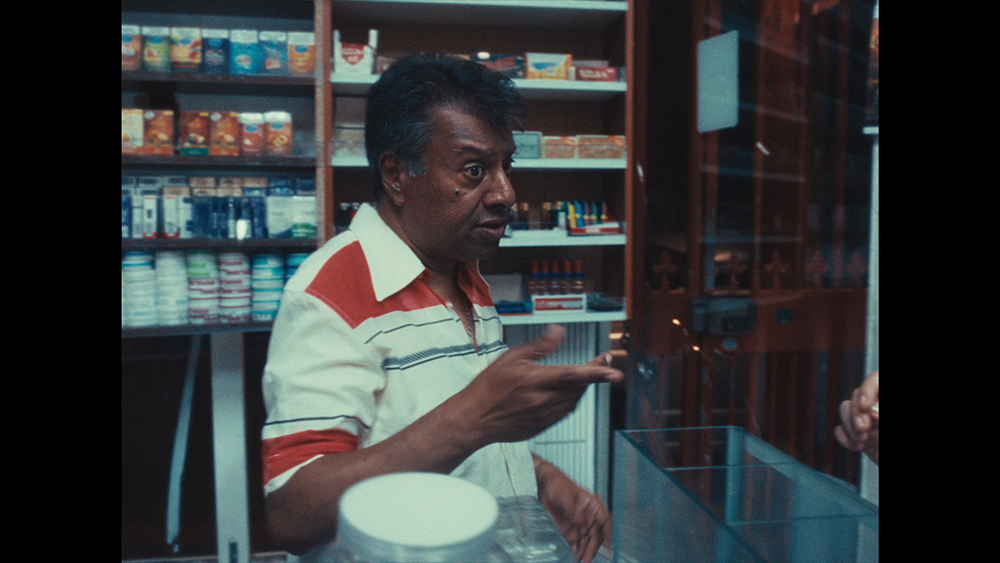
It was wild, but so wonderful with our incredible crew. We truly experienced the Cape of Storms and all four seasons. It was shot over two evenings in Observatory, near Trill Road. On the first evening we had minimal time inside the small shop, then we were outside with a howling southeaster – and around three o’clock a deluge from above hit us. On the second evening we were just about to begin when we heard that our unit manager, Ebrahim Ismail, had passed away. He was a pillar of the film community, and you could see how it affected the entire crew. Filming was halted so that his family and friends could attend the janazah. A week later we picked up again. By then it was scorching hot and without a breath of wind, so the landscape looked somewhat different. A bank of fog was our saving grace – but then our main car didn’t arrive, and the parking area where we were shooting failed to notify us that their trucks start arriving at 04:00. So, we had to borrow cars, change our shooting area, and stop and move every 20 minutes for deliveries from Blue Ribbon or Darling. A strange time of sorrow and also great joy – but everything was possible and beautiful with the crew that our producer, Aisha Williams, had assembled. I walked away feeling particularly grateful.
You are active as a writer, director, and actress. What do you prefer doing, and where do you find the time for everything?
I don’t have a favourite. Life is short. I want to try everything. My prerequisite for any project is that I want to be inspired. I want to work with a crew, or a text, or a director who will push me to discover parts of myself that I don’t yet know. With directing, one has to create that space oneself – but then I make sure I am surrounded by masters in their field. Pierre de Villiers was my cinematographer and, in my opinion, he has mastered the camera. As a writer, I think I still have a great deal to learn – and a great deal to read. As an actress, I enjoy finding and proposing work too, but the most important thing is to feel safe in the hands of your director. And time-wise – if I am excited about something, I will make time for it.