
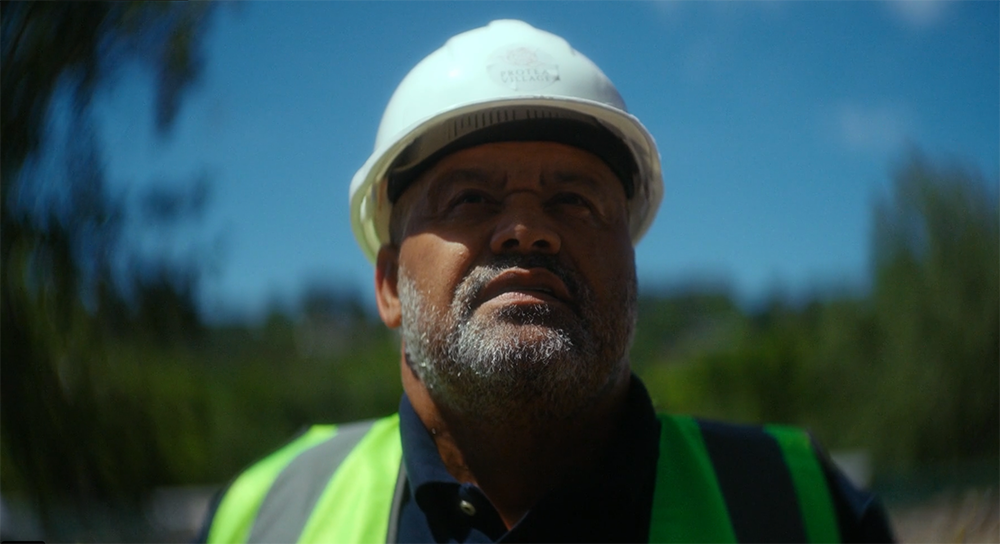
The story of Protea Village and forced removals illuminated in ‘Die grond onthou’
The story’s origin stretches back six decades, to the time of the forced removals. Then followed the land claim of the 1990s and protracted legal processes. Protea Village, adjacent to the Kirstenbosch Botanical Garden in Cape Town, is now finally taking shape, with construction expected to be completed by early 2028.
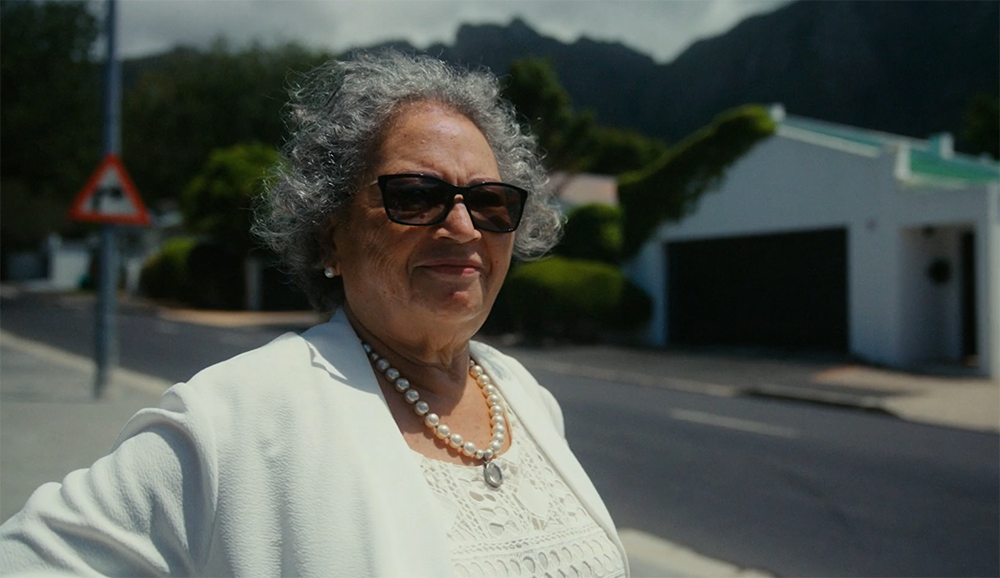
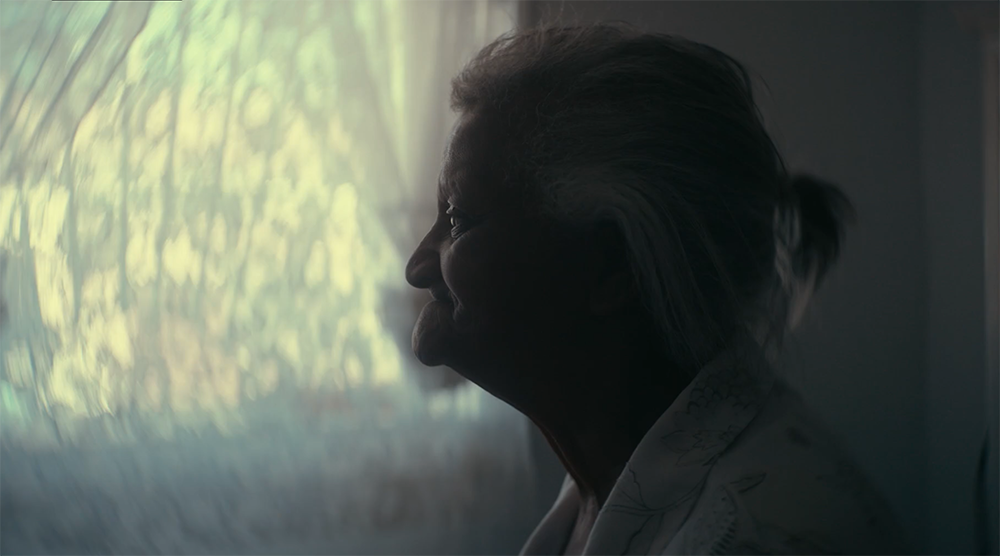
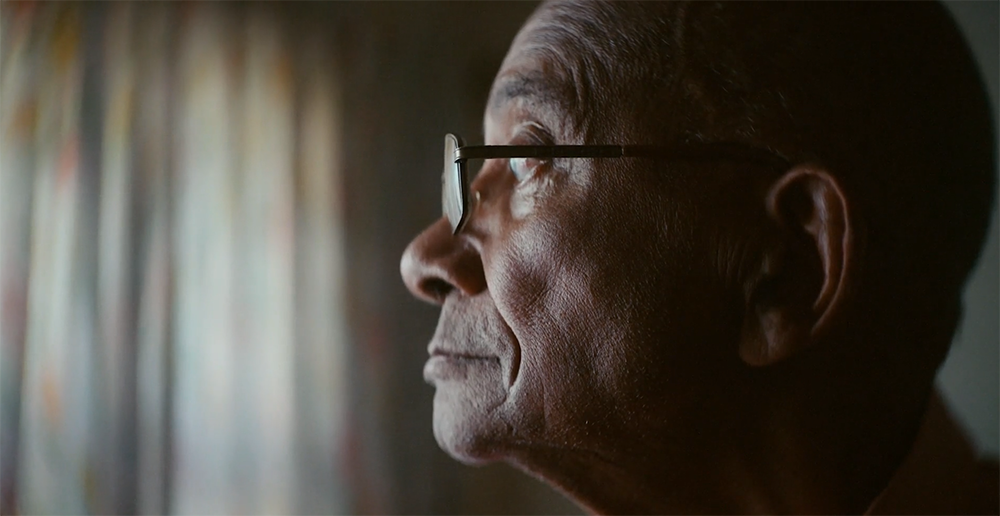
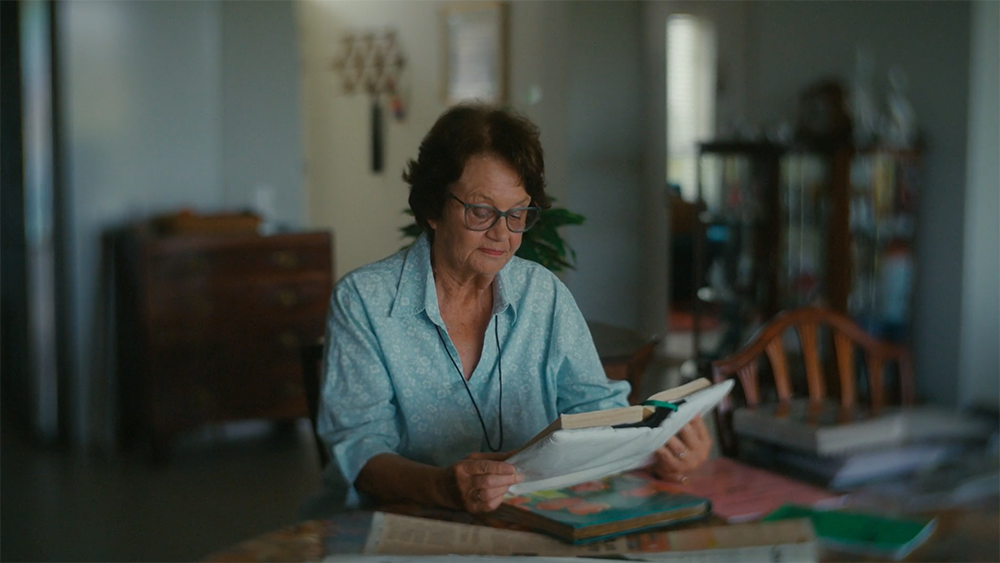
The documentary short film Die grond onthou focuses on the story of Coloured residents of the original Protea Village who were removed between 1959 and 1970 under the Group Areas Act and scattered across the barren Cape Flats.
Director Mia Cilliers became aware of this project when development officially began in March 2025. Early on she did groundwork to make contact with those involved and to gather footage – including, among others, Sonia Roman (77). With the approval of the documentary proposal, she was able to focus on a portion of the story for the kykNET Silwerskermfees, which takes place in Cape Town from 19 to 22 August. A beginning – because the story is not yet complete…
Questions for Mia Cilliers, director
Die grond onthou is an interesting title, given the concept of “the body remembers” (trauma, for example). What do you want to convey with the title?
This concept is implied by the title, yes. Even though there was an official system in place that could remove hundreds of people in Protea Village from their land, one can never erase their humanity, their experiences, and their memories. The loss remains like a scar in the earth. Now 86 families can reclaim their land, but they will never return to the same place they once knew.
It is regarded as one of the great land claim success stories in South Africa, but the challenges for the survivors are immense. Please elaborate.
Protea Village is one of the most successful – if not the most successful – land claim in South Africa. Many communities that have had successful claims have been financially compensated or received alternative, mostly inferior, land.
What makes this case so unique is that the majority of the land on which the community lived was never developed. The land lies just below the main entrance of Kirstenbosch Botanical Gardens and has always remained open as a green strip for Bishopscourt residents to walk along the Liesbeek River.
Not only can the Protea Village community return to some of their original land, but they have received land in one of Cape Town’s most prestigious neighbourhoods – land of considerable value. It is also the first time that a viable economic model has been created: a third of the land is sold as plots at market-related prices (Bishopscourt Estate), which then funds the construction of 86 houses on the second third of the land (Protea Village Estate). The two estates lie across the road from each other. The final portion will be preserved as a green strip for everyone to enjoy.
A future challenge is the services and municipal rates of the area. The land claimants have received a 10-year rates exemption from the City of Cape Town, but this expires within the next few years. The community is making provision by creating their own fund, partly funded by levies from the Bishopscourt Estate owners.
Among themselves, families will have to decide on the right of use of the houses. Where one family claim was submitted, there may today be as many as six siblings who are entitled to the inheritance portion. For many families it may make more sense to rent out their houses, or to sell later – though they may not sell for ten years. The goal of the Protea Village Communal Property Association is to support everyone so as to prevent people from having to sell and the community being divided once again.
When was the documentary completed? Where does the process stand now? The survivors and their descendants are believed to be able to move back in early 2028. Could this lead to a possible “follow-up film”, and would you consider it?
We shot between November 2025 and April 2026. By July of this year, the roads in Protea Village will have been laid out, and by next year construction of the houses will begin so that people can move into their new homes by 2028.
We would very much like to take the story further and have applied for additional funding from the National Film and Video Foundation (NFVF). A feature-length documentary would show how the families move in and how they adapt to the new life in Protea Village, as well as any challenges they had to navigate in deciding who moves back.
Your later studies focused on documentary filmmaking. Tell us more. And what is its importance in the era in which we currently find ourselves?
I studied journalism at Stellenbosch, but wanted to go into film and then completed a master’s degree at UCT in Documentary Arts. The degree also gave me the opportunity to study film as an exchange student in Berlin (Freie Universität Berlin) and in Los Angeles (UCLA). What drew me to the creative documentary is that it should not be seen as current affairs or news. When a filmmaker enters a situation, they make the “truth” their own. There is therefore a great deal of room to play with a story – how one wants to convey it and what one wants to say.
In an era of deepfakes, AI-generated content, and short attention spans, people are still eager to see compelling long-form non-fiction storytelling – it makes one feel connected to something.
Is there a fictional story you would like to tell?
Over the past few years I have done a great deal of research into how organised crime, gangs, and police authorities in Cape Town collude – and how this leads to the levels of crime and violence one sees in the Cape. It is difficult to tell as a documentary, but could be fantastic as a fictional film.